Written by: Ryan Dunlop, CEO and Founder of Full Arch Masters and graduate from the Harvard School of Dental Medicine
Key Takeaways
-
Online dental lab technician courses teach theory, CDT exam prep, and digital design skills. They do not replace hands-on bench work.
-
CDT certification is voluntary yet highly valued by employers. It requires documented experience or CODA-accredited training plus written and practical exams.
-
Free and paid online resources provide CE credits and foundational knowledge, not job-ready fabrication skills.
-
Hybrid programs and employer trainee pathways that combine online modules with required bench time remain the most reliable route to professional competency.
-
Full Arch Masters delivers the hands-on digital design and aesthetic finishing training that online courses cannot provide.
See Full Arch Masters course dates and locations.
The Online-Vs-Hands-On Boundary in Dental Lab Training
The medium of instruction limits what an online dental lab technician course can teach. Online platforms transfer knowledge effectively, while bench work builds muscle memory and tactile judgment.
What online coursework can teach:
-
Dental anatomy and terminology
-
Materials science theory (alloys, ceramics, acrylics, waxes, digital resins)
-
CDT exam preparation across all six specialty areas
-
CAD/CAM and exocad design fundamentals
-
3D printing workflows and file preparation
-
Digital denture design and removable prosthetics workflows
-
Regulatory compliance, OSHA, HIPAA, and state dental practice act basics
What online coursework cannot teach:
-
Waxing and analog fabrication techniques
-
Green-stage contouring of pre-sintered zirconia
-
Aesthetic finishing and ceramic layering
-
Model work and physical impression reading
-
Tactile judgment developed at a bench under time pressure
The realistic path sequences online learning with hands-on bench time. A lab technician can use online modules to build foundational knowledge, prepare for CDT written exams, and develop digital design fluency. They then apply those skills in a bench environment, an employer trainee program, or a structured hands-on course. The two modes work together rather than replace each other.
Free Online Dental Lab Technician Courses and Self-Study Resources
Search results for “free online dental lab technician courses” highlight a short list of legitimate resources. These options help with orientation and theory, but they do not create job-ready technicians.
Free resources support career exploration and continuing education. They do not provide bench skill, certificate-level training, or a credential that signals job readiness to an employer. A technician who completes a library of free online modules gains real knowledge and still needs bench time to qualify for most lab roles.
Move from theory to bench skill with a hands-on course.
CDT Exam Prep Online: Study Systems and NBC Certification Path
CDT certification is not legally required to work as a dental lab technician in the United States. It signals verified competence and can strongly influence hiring decisions and compensation. Employers across dental laboratories recognize the CDT credential as a marker of verified competency, and many list it as preferred or required for senior technician roles.
The NBC administers CDT certification. Eligibility requires either five years of documented dental laboratory work experience or graduation from a Commission on Dental Accreditation (CODA)-accredited dental technology program. The CDT examination covers six specialty areas: complete dentures, partial dentures, crown and bridge, ceramics, orthodontics, and implants. Candidates must pass three exam sections (Written Comprehensive, Written Specialty, and Practical) within a four-year window.
Online study systems built for CDT written exam preparation are structured around the specialty areas and state that users should not rely on them as the sole source of preparation. They do not cover every exam topic.
The Written Comprehensive exam weights Dental Lab Materials (Traditional/Digital) at 34–36% of scored questions, which makes materials science theory one of the most online-learnable components of CDT preparation. Both written exams run remotely through proctored software, so online study aligns well with the exam format. The Practical exam is performance-based, lasts 5 hours 15 minutes, and requires real bench skill.
Digital-Skill Online Modules: CAD/CAM, Exocad, and 3D Printing
The digital shift in dental laboratory work has created a strong category of online training. CAD/CAM proficiency, including platforms such as exocad, 3Shape, and Dentsply Sirona’s inLab, is now a baseline expectation in most dental laboratories. Software skills respond well to screen-recorded instruction and case-based exercises.
Free, self-paced online CE content organized by profession and topic covers digital dentures, fixed prosthetics, removable prosthetics, CAD/CAM restorations, and 3D printing. Free webinar series include beginner and advanced sessions on digital smile design, night guard design, duplicate denture workflows, full-arch implant restorations, and custom abutment design. Structured online exocad courses with AGD PACE-approved CE credits cover All-on-X digital design workflows.
Online digital modules provide a strong entry point for the design side of lab training. They do not cover the finishing side, including green-stage contouring, ceramic layering, and material-specific judgment that separates acceptable from exceptional full-arch restorations. That boundary marks the point where hands-on training becomes essential.
Employer Trainee Programs and Hybrid Certificate Programs
Technicians who need both knowledge and bench skill often choose between employer trainee programs and hybrid certificate programs.
Employer trainee programs provide paid, hands-on training in a working lab. Some large dental organizations offer development programs for early-career hires that include exposure to digital workflows such as 3D printed dentures and advanced scanning technology. Trainees learn by doing real cases under supervision, which accelerates bench proficiency for technicians without prior experience.
Hybrid certificate programs combine online coursework with required in-person bench time. A hybrid dental laboratory technology certificate program blends online coursework with hands-on training in crowns, bridges, dentures, CAD/CAM, and 3D printing. This format closely mirrors structured on-the-job training.
CODA accredits dental laboratory technology programs in the United States, and CODA accreditation ensures graduates are eligible to sit for the CDT examination, with a Recognized Graduate pathway that can shorten the experience requirement in some cases. Fully online CODA-accredited programs remain rare because accreditation standards require demonstrated hands-on competency. Programs that describe themselves as “accredited” without naming CODA may hold a different, less relevant credential.
Career Reality-Check for Dental Lab Technicians
How Long Does It Take to Become a Dental Lab Technician?
On-the-job training typically requires two to four years to develop sufficient proficiency across common case types; a new technician can expect to spend two to six years reaching full professional standing depending on educational route and certification goals. A CODA-accredited associate degree usually takes about two years. Certificate and diploma programs in dental laboratory technology often last around one year.
Is Becoming a Dental Lab Tech Worth It?
The U.S. Bureau of Labor Statistics reported a median annual wage of $45,820 for dental and ophthalmic laboratory technicians as of May 2024, with approximately 7,700 openings projected per year. Technicians who specialize in implant restorations, high-end ceramics, or maxillofacial prosthetics often earn higher compensation. The career remains attractive for technicians who pair digital design fluency with strong finishing skill, which is the combination labs seek as they modernize.
Is There a Shortage of Dental Lab Technicians?
The U.S. dental lab workforce has declined by more than 30% since 2004, while restorative demand has remained steady. Each year approximately 3,300 to 4,000 experienced dental lab technicians exit the U.S. workforce while only about 800 to 1,000 new technicians enter, so retirements outpace new entrants by nearly 3:1. Roughly 4,375 U.S. labs remain in business. This pattern reflects a structural shortage.
Will AI Replace Dental Lab Technicians?
AI, CAD automation, milling, 3D printing, and robotics are shifting the technician’s role toward judgment, orchestration, and trust. Automated crown design services can reduce active design time for routine cases. They usually enter labs through high-volume posterior work rather than complex anterior cases. Skilled technicians who supervise automated systems, catch errors, and apply aesthetic judgment gain value in a digital lab.
Is Being a Dental Lab Technician Hard or Low-Stress?
The role requires physical stamina, including long periods of standing, sitting, and bending, replenishing plaster bins, moving heavy flasks and case pans, and using step stools to reach case storage. Precision work under turnaround pressure is common. The job functions as skilled manufacturing work rather than sedentary office work.
Technicians who want to move beyond basic production into high-value full-arch digital design and finishing benefit from structured hands-on training that builds those advanced skills.
Train for the digital-and-finishing combination labs need.
Where Full Arch Masters Fits in a Technician’s Training Path
Technicians who focus on full-arch implant work eventually reach the limit of what online modules can provide. Green-stage contouring, MIYO ceramic layering, and material-specific judgment for full-arch zirconia restorations require in-person coaching and repetition. Full Arch Masters’ Design and Finish Course addresses that gap.
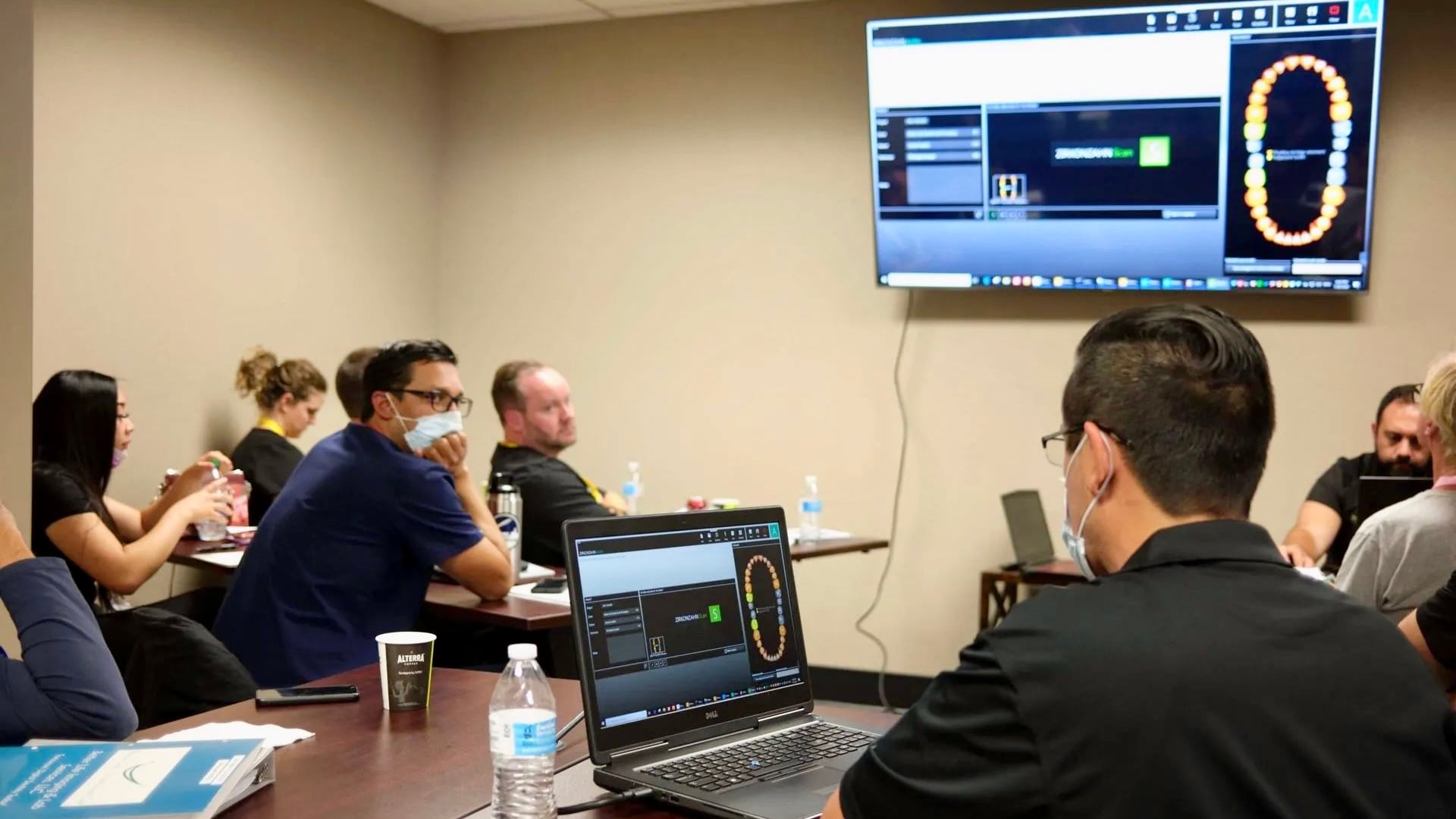
The Design and Finish Course is a four-day, lab-focused program in Fresno, CA. The first two days cover digital design in exocad, including preop records, digital mockups, surgical alignment devices, surgical record imports, immediate-load prosthetics, and final zirconia design. The second two days focus on hands-on aesthetic finishing with pre-sintered and post-sintered zirconia, green-stage contouring, and MIYO ceramic layering. Material modules address PMMA, metallic frameworks, PEEK, zirconia, and crystal-based materials. Tuition is $6,995.
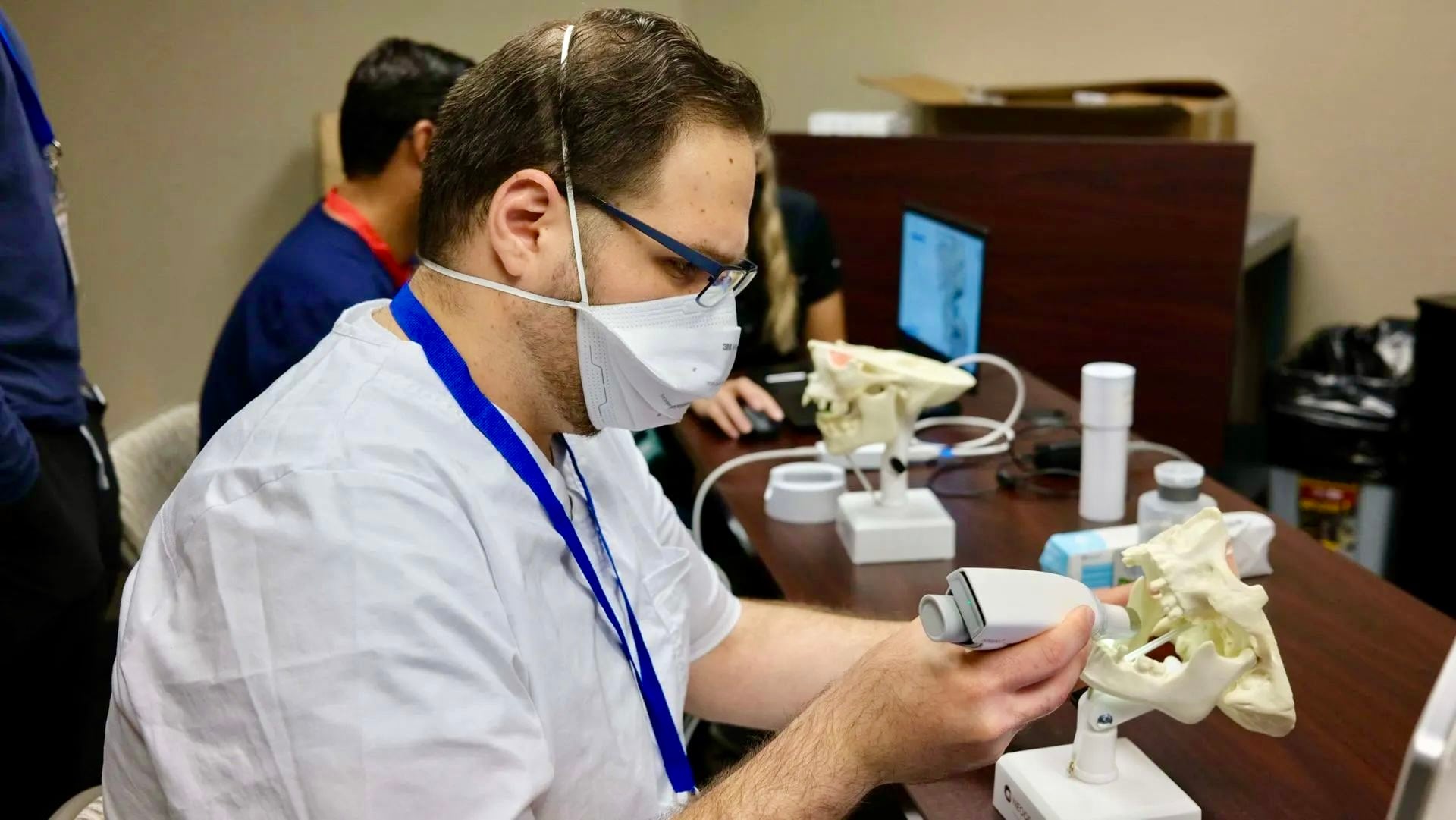
Full Arch Masters surveys attendees in advance and separates beginners from advanced designers so each track runs at an appropriate pace. A technician who is strong on design but weaker on finishing, or the reverse, receives instruction calibrated to their specific gap.
Lab technicians can also attend the FP1 Course, where lab attendees receive FP1-specific design instruction that differs from FP2 and FP3 workflows. In-house lab technicians can join the Flagship Course alongside the dentist they support so both sides of the practice return aligned on the same full-arch workflow.
Every attendee joins Full Arch Masters’ alumni community through private group chats and gains access to the KOL (Key Opinion Leader) buying group, which offers vendor discounts on materials and equipment with no recurring fee. Full Arch Masters courses carry 32 continuing education credits through the American Academy of General Dentistry (AAGD).
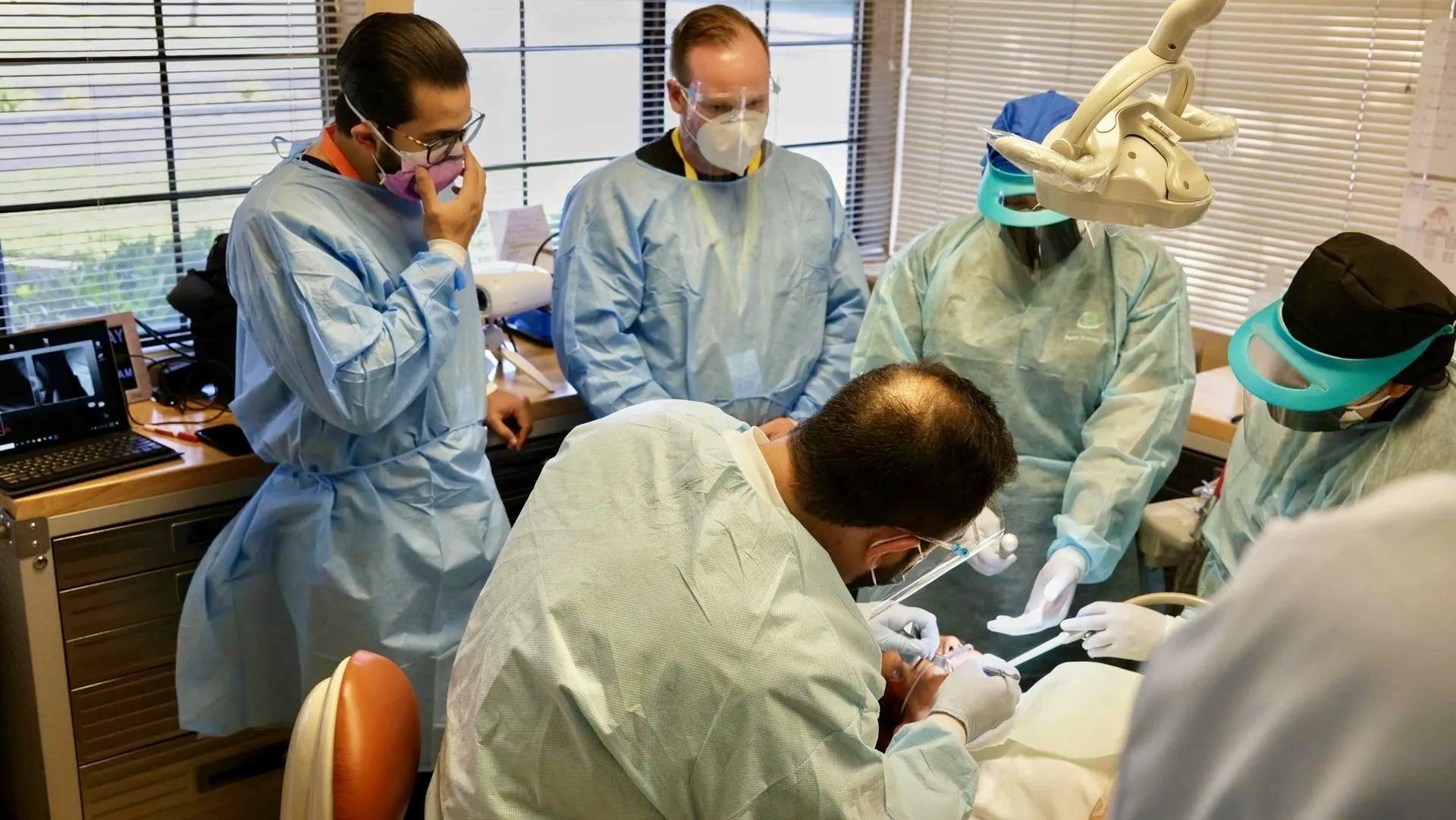
As lab technician Edward Slusser of The Villages, FL put it: “It’s the best course I’ve been to.” Gus Khalil of Orlando, FL added: “If you’re thinking about going digital come and take this course!”
Common Pitfalls and How to Avoid Them
Several recurring mistakes derail lab technicians and practice owners who pursue online dental lab technician courses without a clear plan.
-
Assuming a fully online path leads to a job. Online courses build knowledge, while employers hire bench skill. A technician who completes online modules without hands-on fabrication experience will struggle to pass a practical interview or a CDT Practical exam. The fix is to sequence online learning with an employer trainee program, a hybrid certificate program, or a structured hands-on course before applying to production roles.
-
Confusing CE modules with certificate programs. A 0.5-credit NBC-approved module serves as continuing education for a working technician. It does not function as a certificate program and does not signal entry-level job readiness. The solution is to read credential language carefully and ask whether the program leads to a certificate, a CODA-accredited degree, or CE credits only.
-
Skipping bench time entirely. The CDT Practical exam is performance-based and cannot be passed through online study alone. Most lab roles require demonstrated fabrication skill. Technicians should treat bench time as a required part of their training plan.
-
Choosing a program that does not align with CDT goals. Many online modules help with upskilling but do not follow the CDT exam blueprint. A technician who wants CDT certification needs programs that match the NBC’s six specialty areas and three-exam structure. The practical approach is to verify whether the program explicitly addresses CDT exam preparation before enrolling.
-
For in-house lab technicians: training that conflicts with the practice workflow. A lab technician who learns different design software or finishing protocols than the dentist uses creates friction at handoff. The best approach is to attend training alongside the dentist when possible or confirm that the course supports the practice’s existing workflow before enrolling.
Frequently Asked Questions
How Do You Become a Dental Lab Technician Online?
Online learning covers the knowledge foundation, including dental anatomy, materials science, CDT exam preparation, and CAD/CAM design fundamentals. To become employable, that foundation must pair with hands-on bench experience through an employer trainee program, a hybrid certificate program, or a structured in-person course.
Do You Need a Certification to Become a Dental Lab Technician?
No federal license or certification is required to work as a dental lab technician in the United States. CDT certification through the NBC remains voluntary, yet it signals verified competence and is preferred or required for many senior roles. CDT-certified technicians often command higher pay, and the credential demonstrates commitment in a field where formal credentials are uncommon.
Are Online Dental Lab Technician Courses Accredited?
CODA accredits dental laboratory technology programs in the United States. CODA accreditation supports eligibility for the CDT examination and can provide a Recognized Graduate pathway that shortens the experience requirement in some cases. Fully online CODA-accredited programs are rare because accreditation standards require hands-on competency. Many online courses offer NBC or AGD PACE-approved CE credits, which help working technicians but do not equal CODA program accreditation.
What Is the Difference Between Free, Paid, and Hybrid Online Options?
Free resources provide theory, orientation, and NBC-approved CE credits that support exploration and continuing education. Paid online platforms deliver structured CDT exam prep or software training. Hybrid programs combine online coursework with required in-person bench time and give the most complete option for technicians who cannot access a full CODA-accredited program.
How Do Digital Skills Fit Into Online Learning for Lab Technicians?
Digital design skills such as exocad, CAD/CAM, and 3D printing workflows represent the most online-friendly part of modern lab training. Software instruction works well through recorded video and case-based exercises, which makes digital modules a strong entry point for technicians moving from analog to digital workflows. Digital design alone does not cover aesthetic finishing, material judgment, or the bench skills needed for full-arch restorations.
Conclusion and Next Steps
Online dental lab technician courses now play a central role in teaching theory, CDT exam preparation, and digital design fundamentals. They do not replace bench time, and a technician still needs hands-on fabrication experience to become job-ready. The most effective path sequences online learning with bench time based on the goal, whether that goal is career entry, CDT certification, digital upskilling, or advanced finishing for full-arch work.
The evaluation framework in this guide applies to every course a technician or practice owner considers: skill type, format, cost, time to complete, CDT preparation, and bench time included. Applying this framework consistently turns a crowded online landscape into a clear set of options.
As the digital lab world evolves with AI design tools, new material systems, and expanding CAD/CAM platforms, the line between online learning and bench training will keep shifting. Digital design skills will grow more teachable online, while aesthetic judgment and material-specific finishing will continue to depend on in-person practice. Revisiting a training plan regularly helps keep skills aligned with current tools.
Technicians who already have a digital design foundation and need the finishing side, or who need both design and finishing for full-arch implant work, can use Full Arch Masters’ Design and Finish Course as a structured four-day solution.
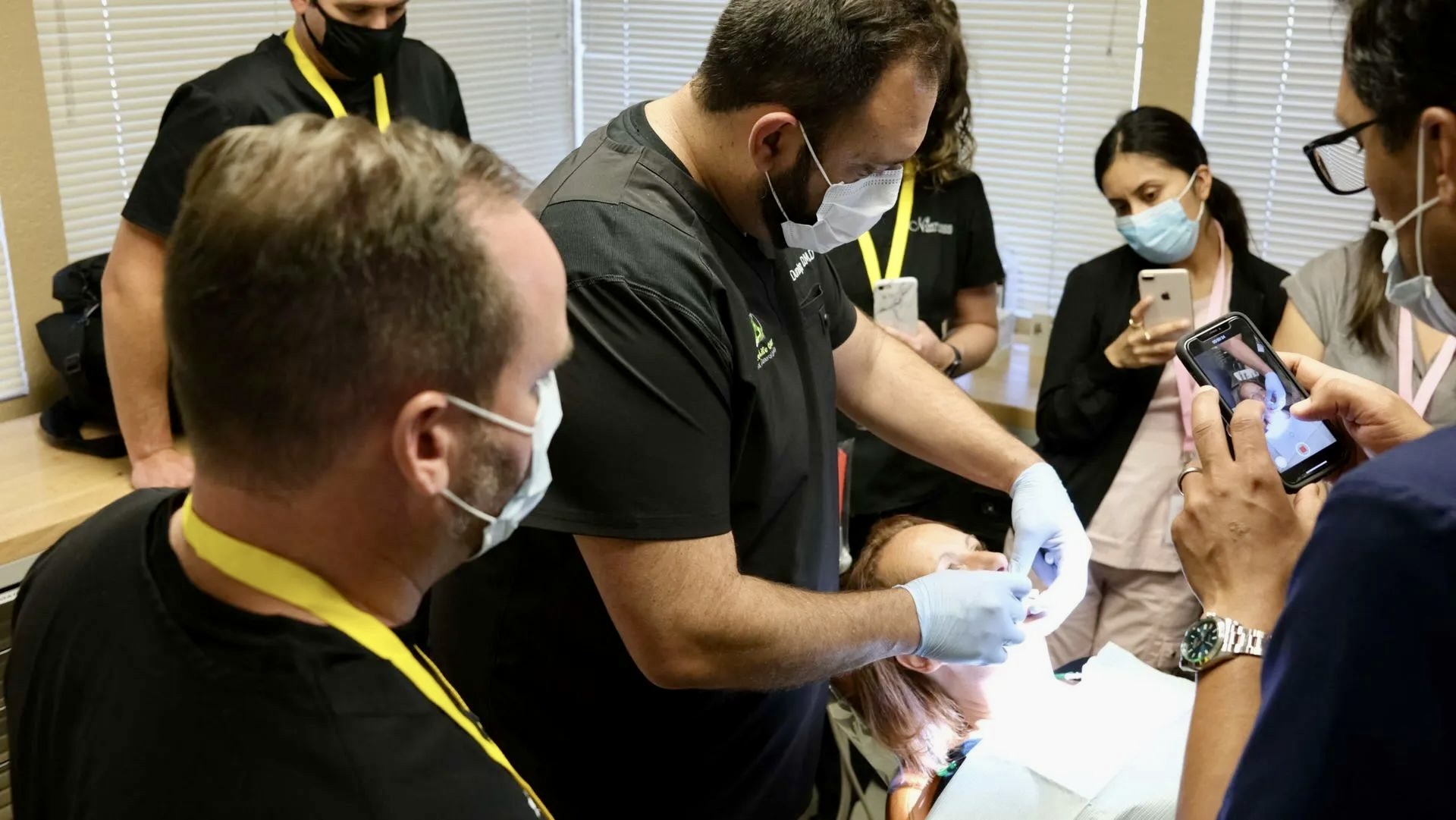
Start your hands-on full-arch training.
For practice owners who want to close more full-arch cases and maximize the return on their lab training investment, Full Arch Masters’ Treatment Coordinator Bootcamp trains the front-office team on the in-house closing system, where the treatment coordinator maintains an 80% closing rate.
Train your team with the Treatment Coordinator Bootcamp.